Residential Rubbish Removal Cape Town: A Homeowner's Guide
Residential rubbish removal in Cape Town starts at one 240-litre black wheelie bin emptied once a week — and that's where it ends, too. The trouble starts the moment your rubbish outgrows that bin: a fridge on the kerb, three weeks of post-renovation bags, a garage cleared after a move, the contents of an estate. None of that goes in the wheelie bin. None of it gets picked up at the kerb. And under South African law, it stays your problem until it is lawfully handed to someone permitted to take it. This guide explains what an actual residential clearance involves in 2026 — what the City does, what you have to organise yourself, what it costs, and what you legally cannot throw in with the rest.
Key takeaways
- Only what fits inside the closed 240L bin is collected at the kerb — bags placed alongside or on top are not picked up.
- A typical Cape Town residential clear-out runs R1,200–R1,800 for a half-bakkie load (2–3m³) and R2,000–R2,800 for a full bakkie (4–5m³), with Atlantic Seaboard addresses adding R200–R400 for access.
- Hazardous household waste — paint, batteries, fluorescent tubes, motor oil, asbestos, e-waste — cannot go in your bin. The City takes it at Athlone or Bellville hazardous-waste drop-offs (50kg/day per resident).
- NEMWA s.16 makes every homeowner a "holder of waste" with a legal duty of care all the way to lawful disposal — not just to the kerb.
- Illegal dumping in Cape Town is a R500–R10,000 fine, plus vehicle impoundment from R8,700 and possible imprisonment of 6 months to 2 years.
What does "residential rubbish" actually cover?
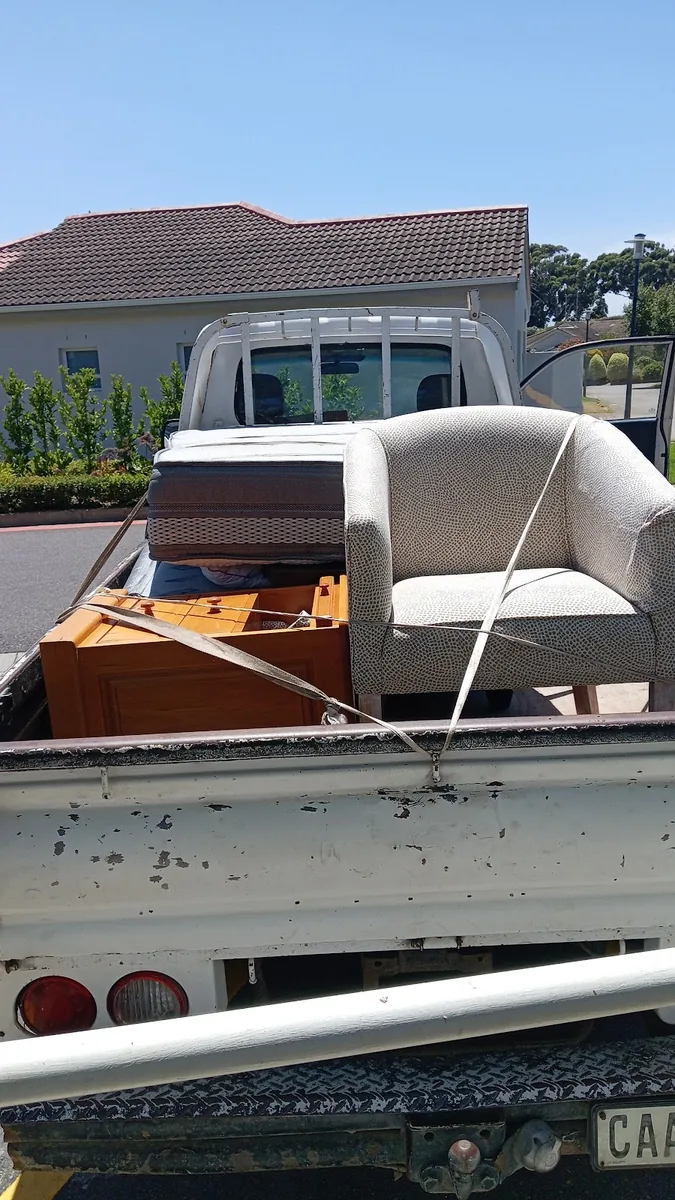
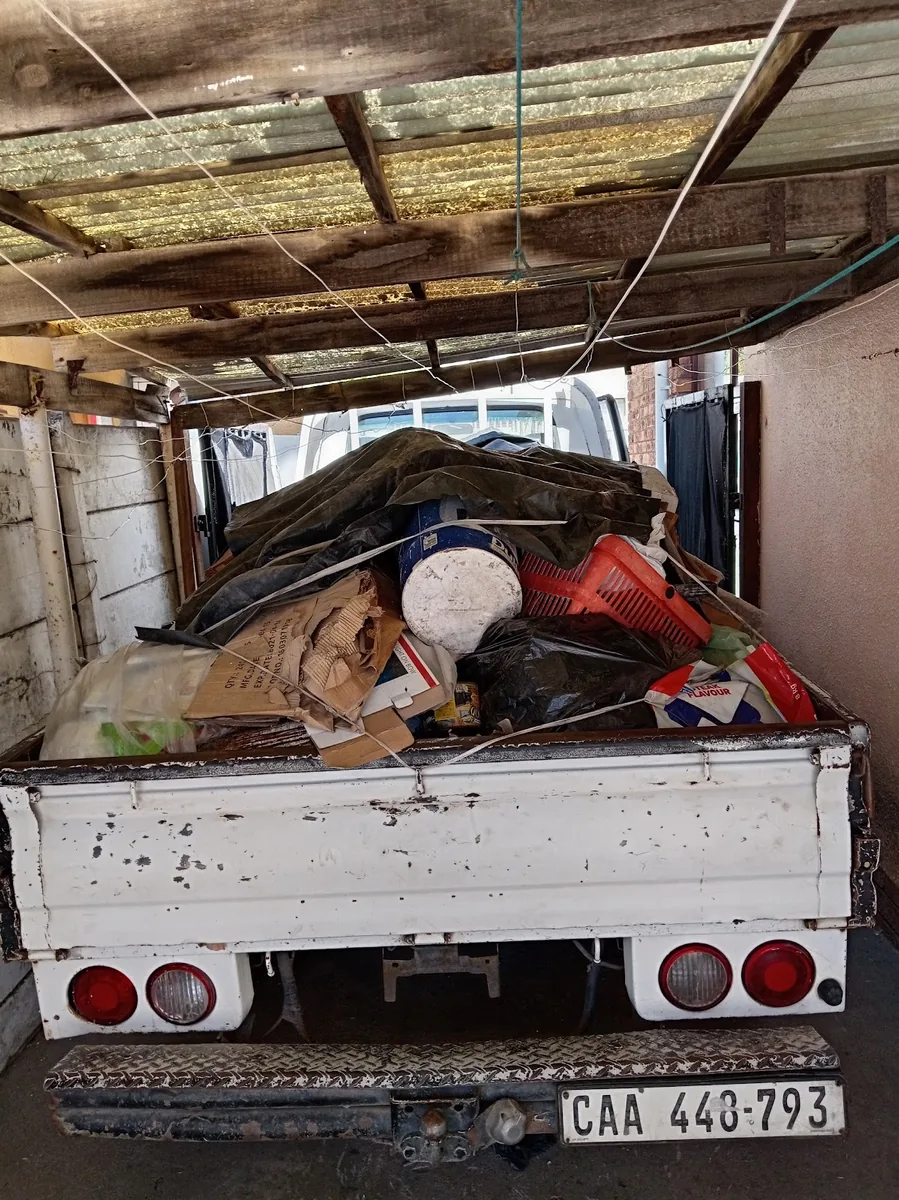
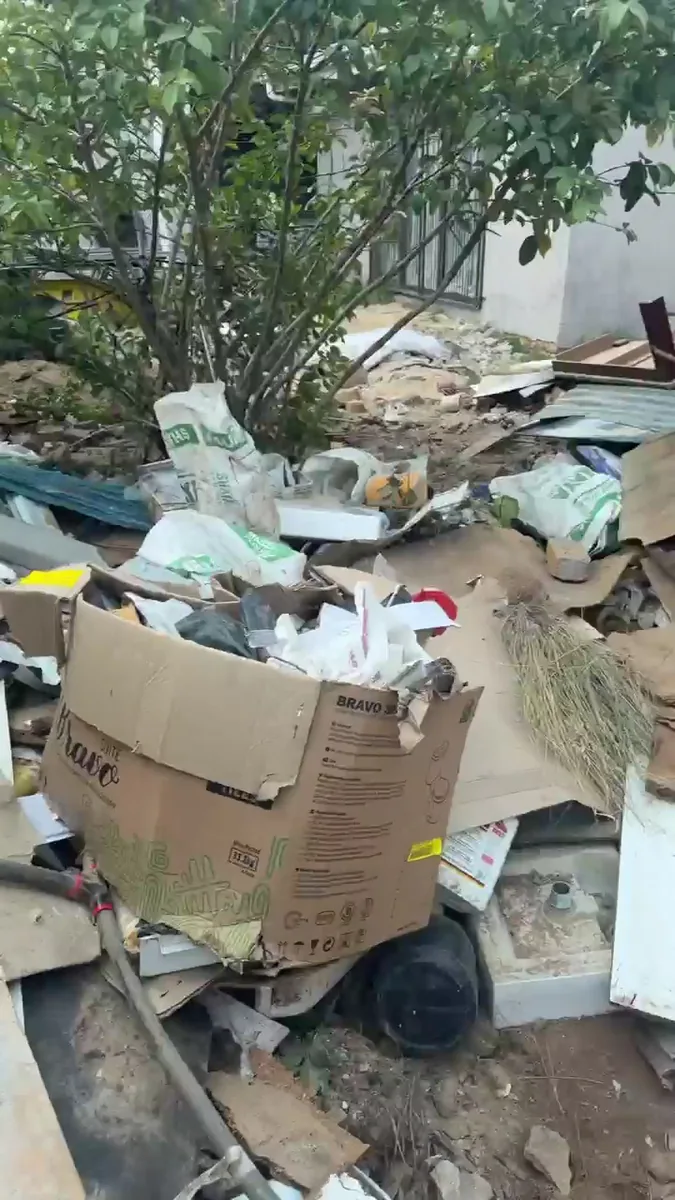
The City of Cape Town Integrated Waste Management By-law (2009) defines "domestic waste" as the waste that comes off a property used "wholly or mainly for residential, educational, healthcare, sport or recreational purposes" — explicitly excluding hazardous waste. In practice that means the mixed-stream stuff that piles up around a normal home: bagged kitchen and bathroom rubbish, broken household goods, outgrown furniture, post-clear-out boxes, the contents of a shed nobody opened for ten years, garden bin overspill, and the odd mattress you swore you'd take to the dump yourself last Easter.
What it does not cover, in any honest reading of the by-law or the City's guidance:
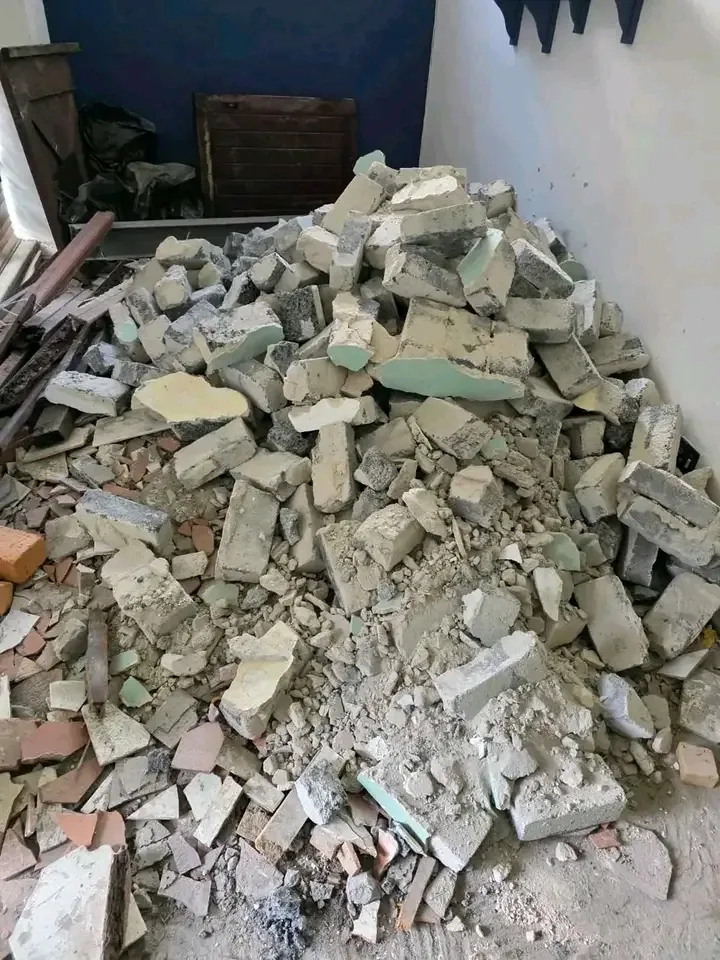
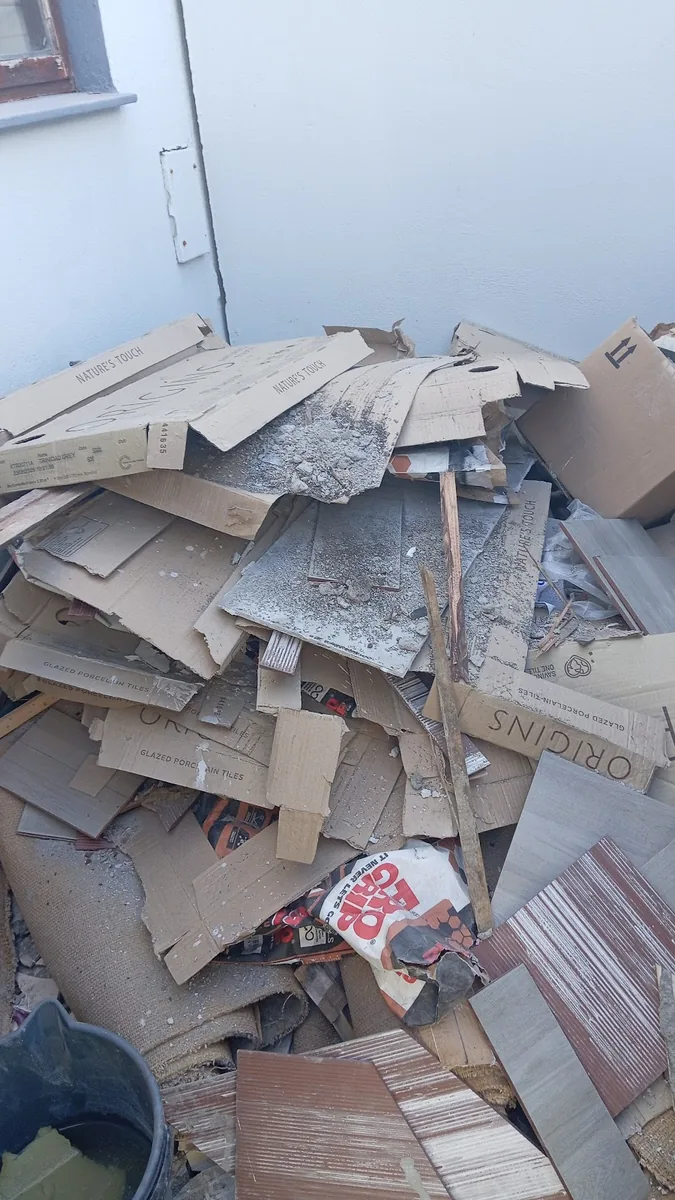
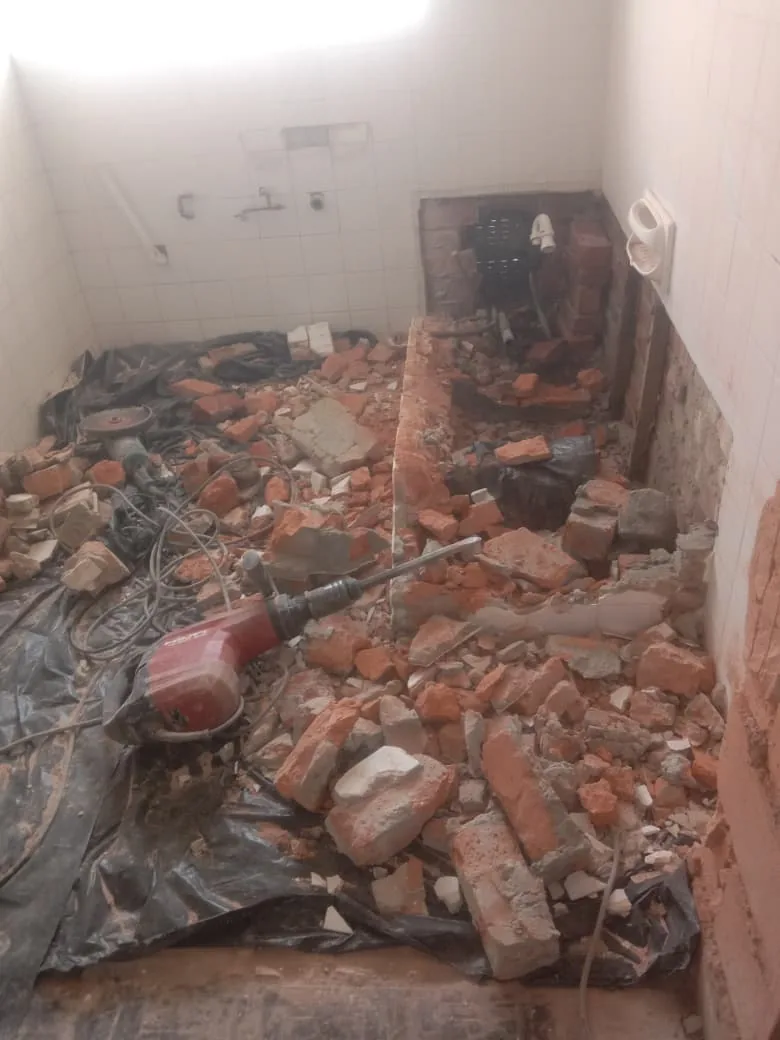
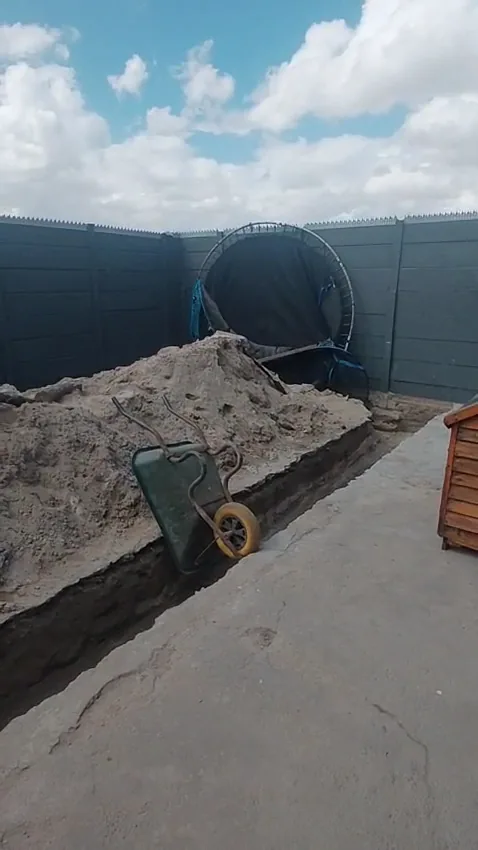
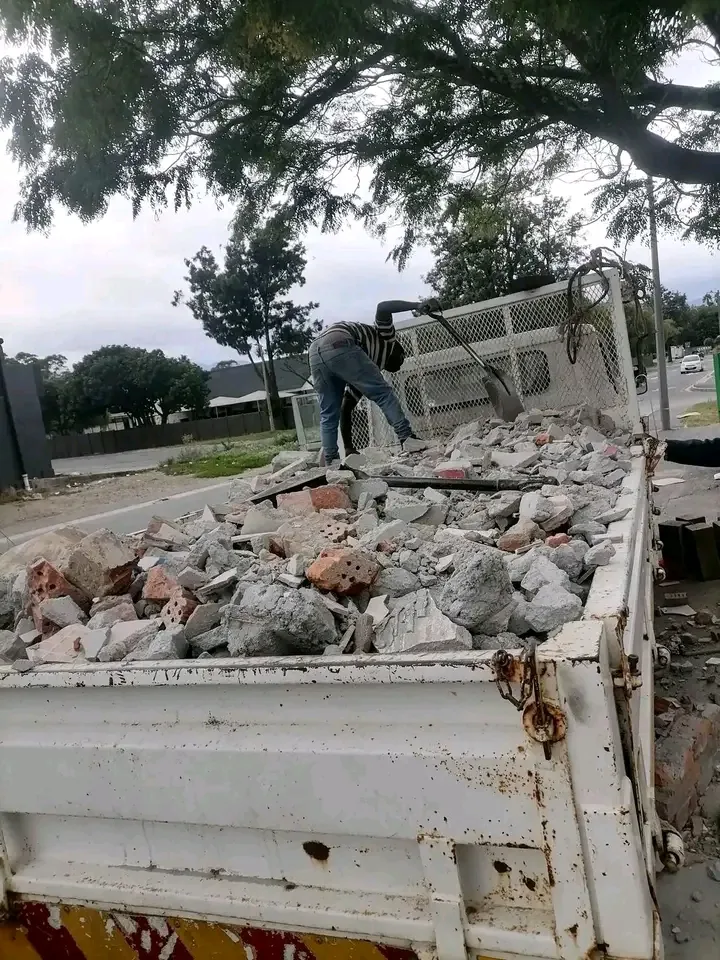
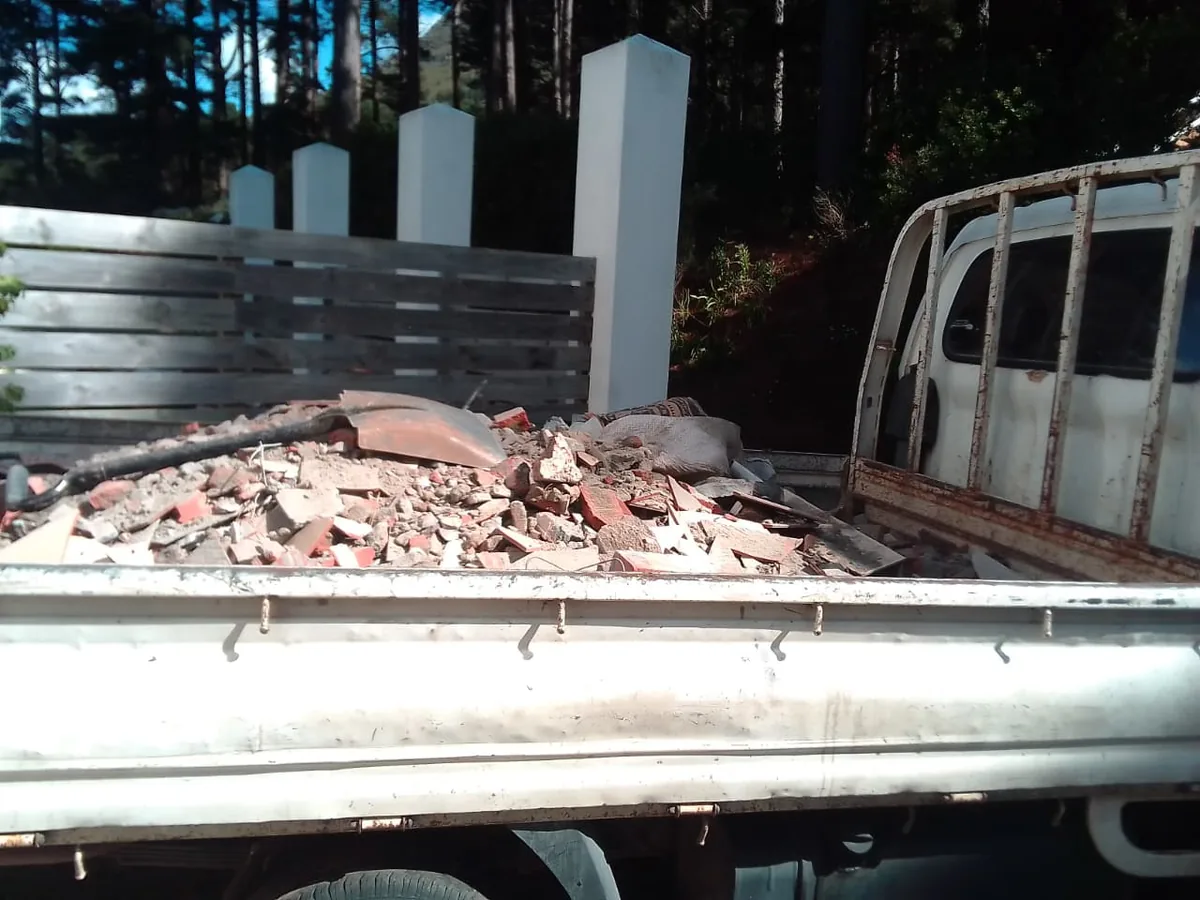
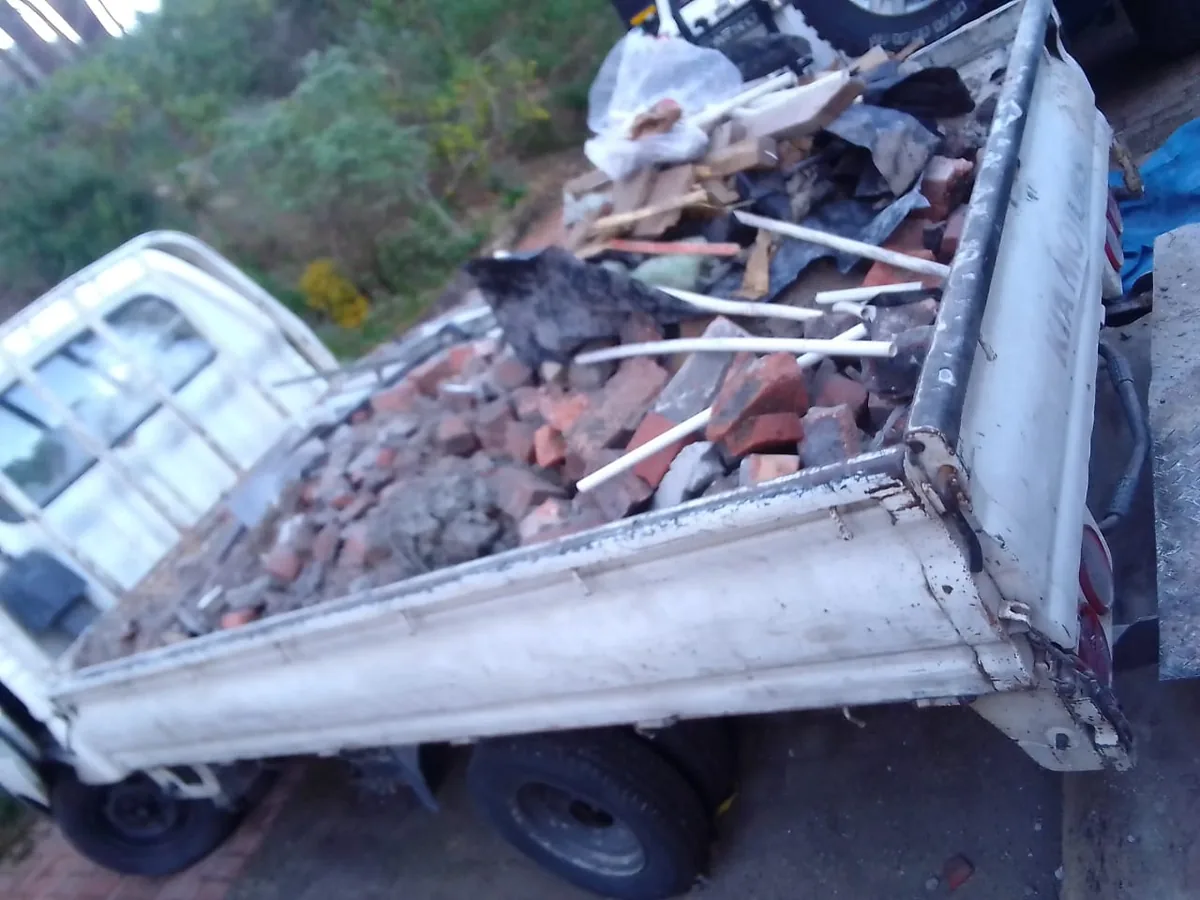
- Builders' rubble — concrete, tile, brick, sand, plasterboard, rocks. Different stream, different drop-off, different price.
- Hazardous household waste (HHW) — paint, solvents, ammonia and bleach containers, used motor oil, fluorescent tubes, batteries, asbestos.
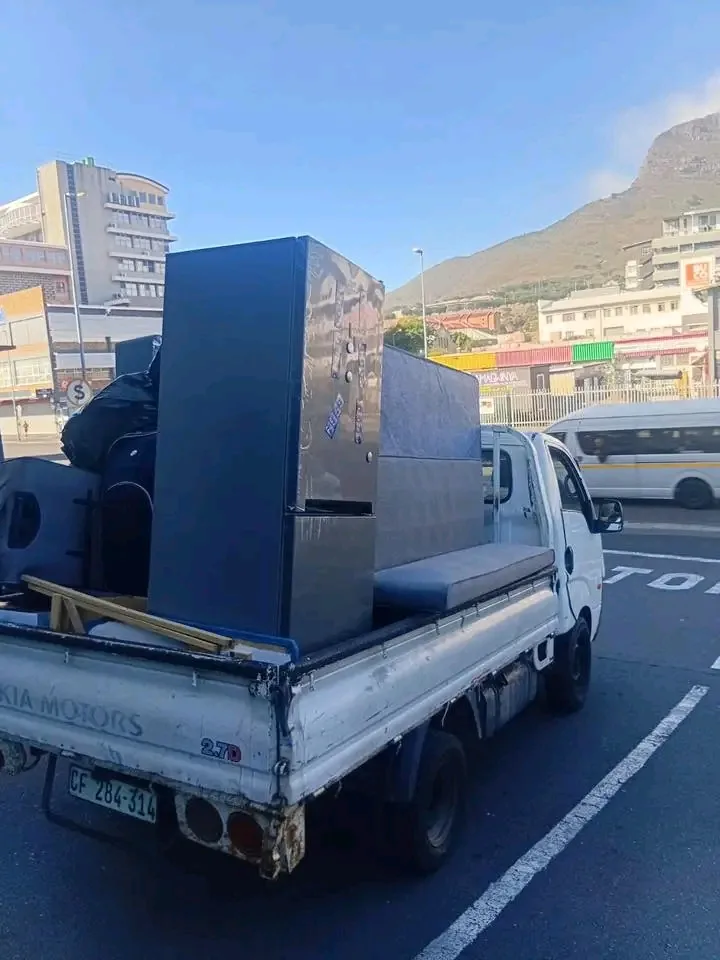
- E-waste — old fridges, kettles, computers, printers, cell phones, appliances. Under the 2020 Extended Producer Responsibility Regulations (gazetted under NEMWA s.18 and effective from May 2021), these must go through a registered EPR scheme rather than into general residential rubbish.
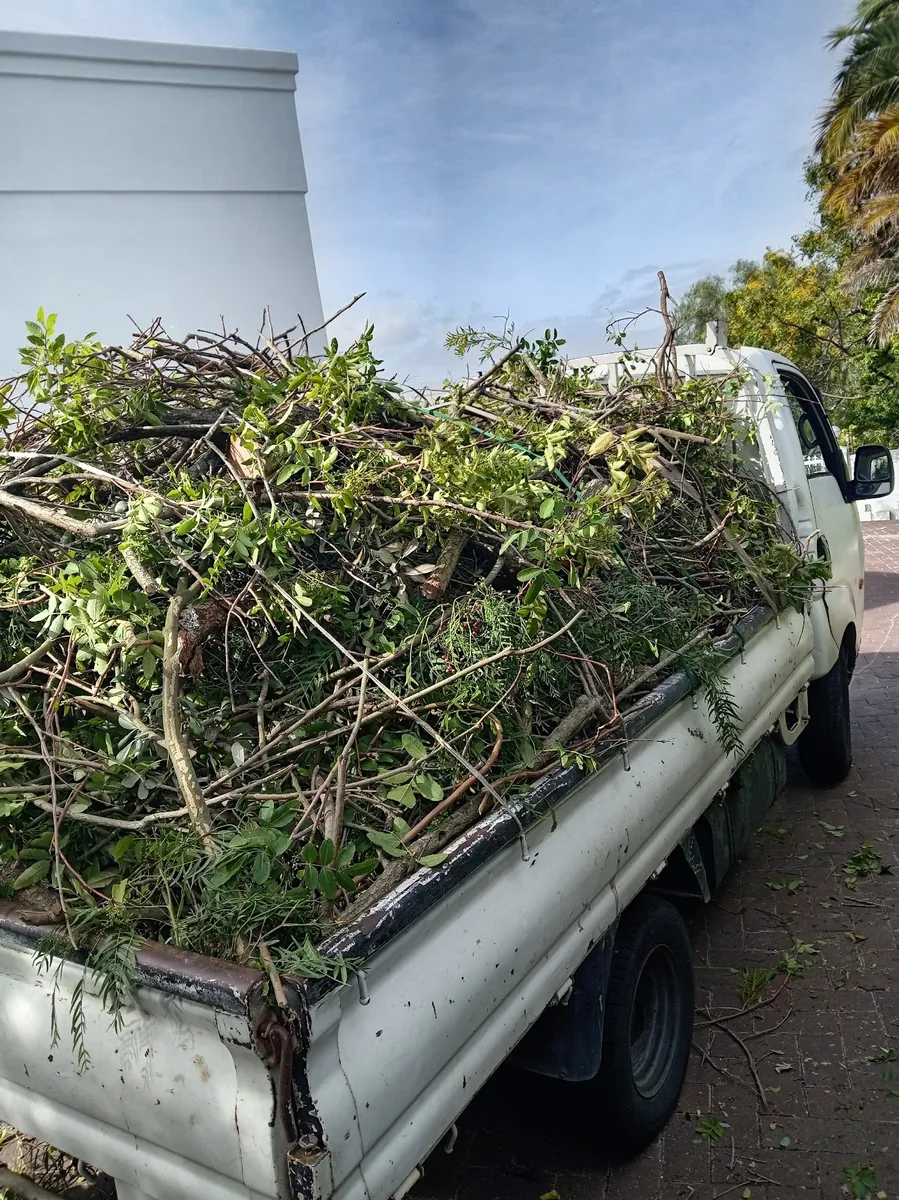
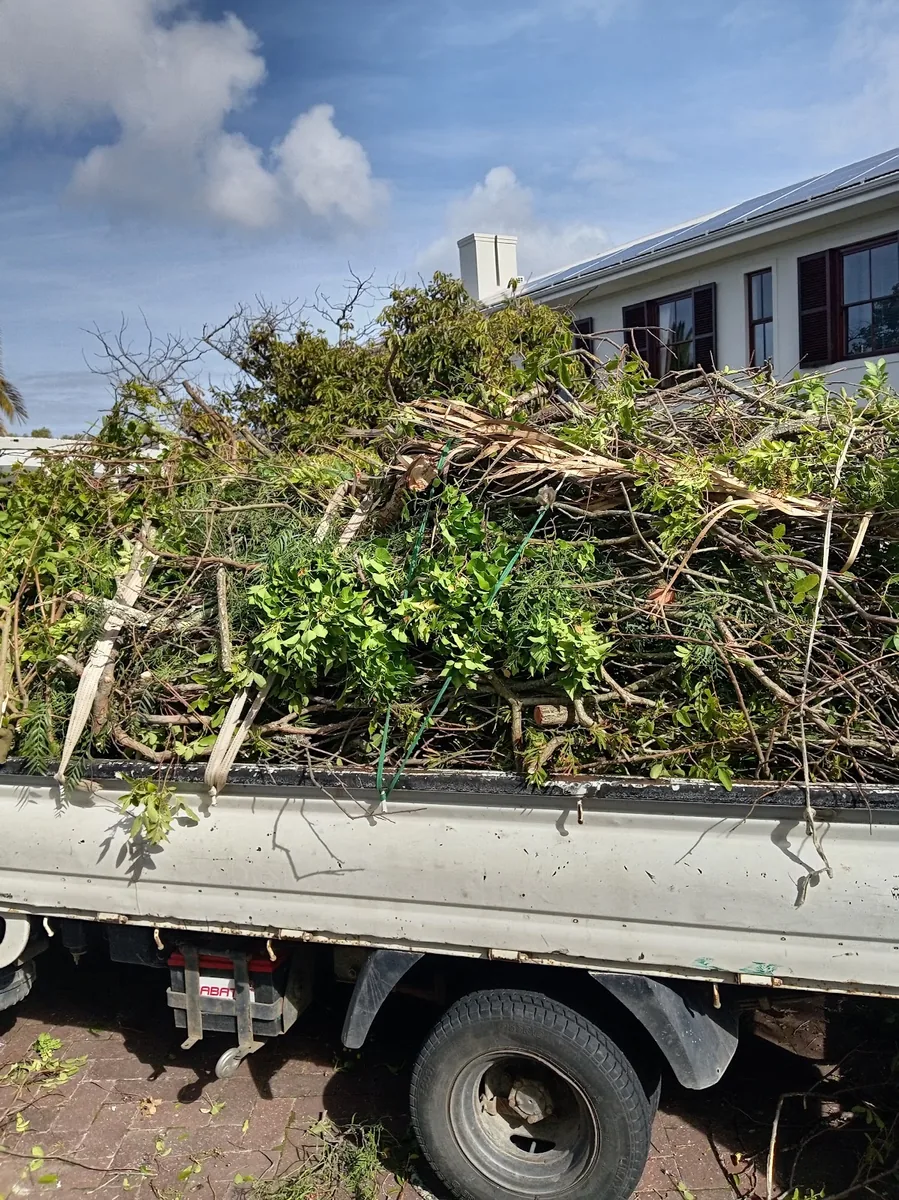
- Garden refuse in volume — the wheelie bin holds about half a cubic metre of compacted clippings. A garage filled with autumn prunings is a separate job.
Mix the streams together and three things happen: the City may not collect, the drop-off gate staff will turn you away, and the fee on a contaminated load triples. The honest rule is that the rubbish-removal crew is sorting the streams whether you do it or not — you are paying for the labour either way.
What the City of Cape Town will and won't collect
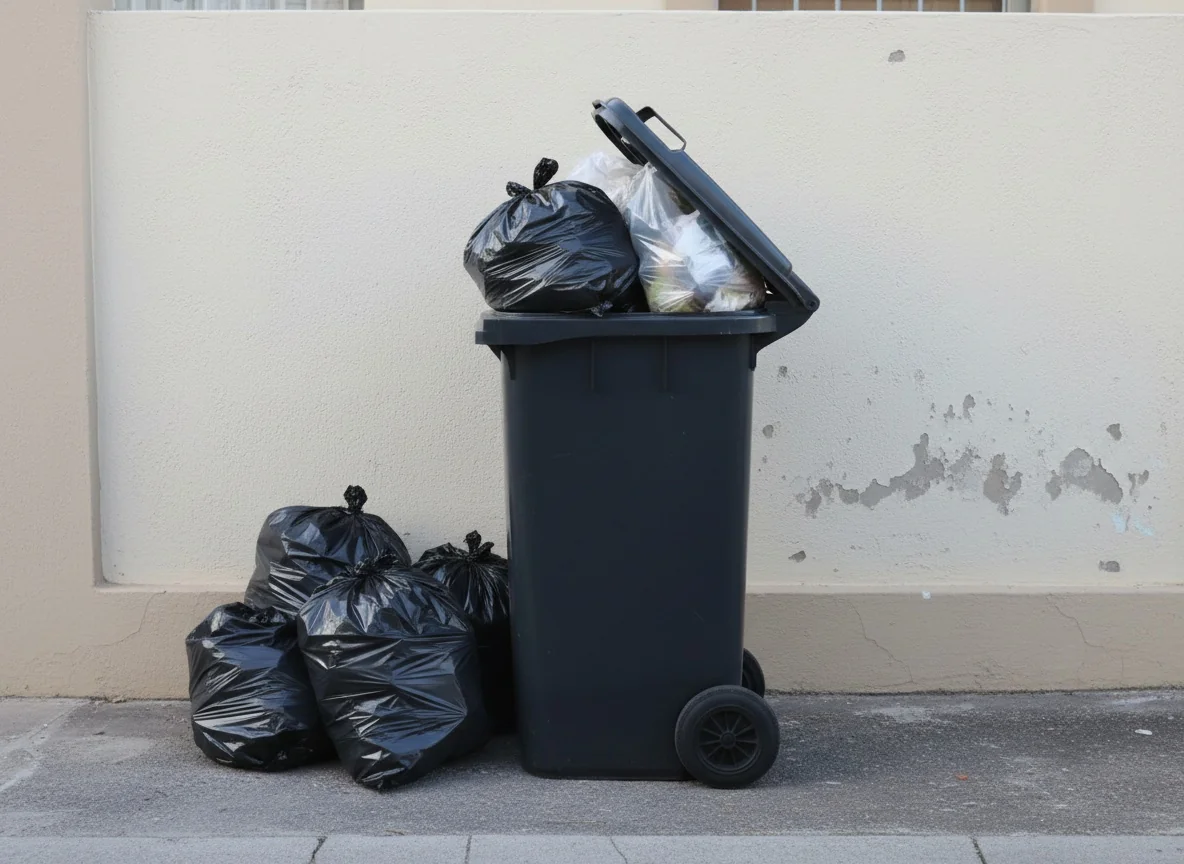
The City's residential waste service does one thing well and one thing only: the weekly kerbside collection of the 240-litre black wheelie bin. The official rules are tighter than most homeowners realise. Per the City's own collection-services page:
- Bins must be at the kerb by 06:00 on the scheduled collection day.
- Only waste sealed inside the bin is collected. Extra bags on top, beside or behind the bin are not.
- Builders' rubble, oil and metal parts, medical waste, chemicals and manufactured waste are explicitly not allowed inside the bin.
- Households generating consistently more than 240L per week can apply for a second bin — but the application has a wait and there's a delivery fee.
For everything beyond the bin, the City runs 20+ drop-off facilities that accept up to 1,300 kg (1.3 tonnes) of non-hazardous residential waste per resident per day, free of charge — see the full table at City of Cape Town drop-off facilities. Hours are 08:00–17:45 on winter weekdays; in summer they vary by facility, with most sites closing at 18:00 and a few running to 20:30. Saturdays and public holidays are 08:00–17:00 — only Good Friday, Christmas Day and New Year's Day are closed. Four of them — Welgelegen, De Grendel, Atlantis and Kensington — do not accept bulky waste such as furniture and mattresses, so the choice of drop-off matters depending on what you're carrying.
What does residential rubbish removal cost in Cape Town in 2026?
Once the load exceeds what the bin and a Saturday boot-run can absorb, you're in the territory of a paid collection. These are our own 2026 bands for residential clear-outs across Cape Town, with loading, transport, tipping and VAT included in every figure:
- Small load (≤1m³): R600–R900. Single fridge, a chair and some boxes, or a hand-trolley pile from one room.
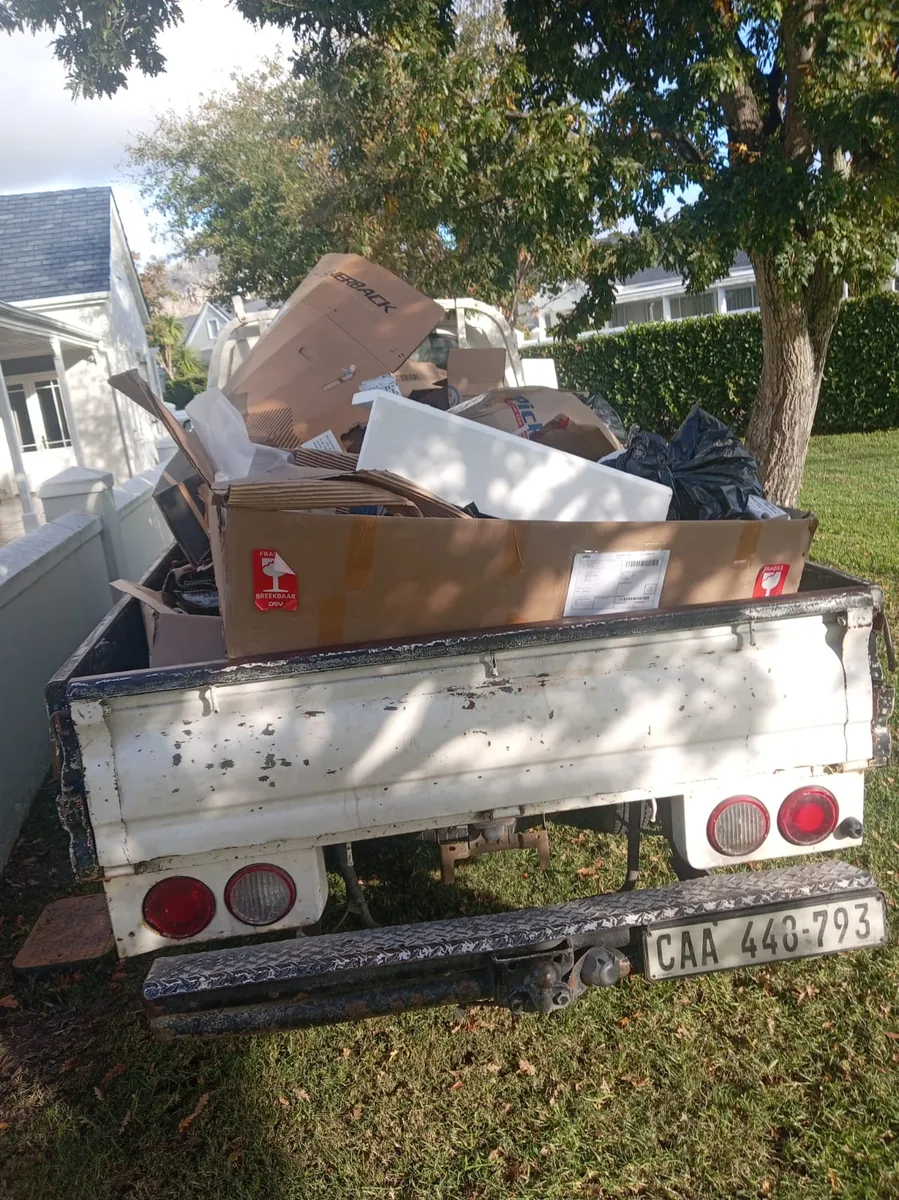
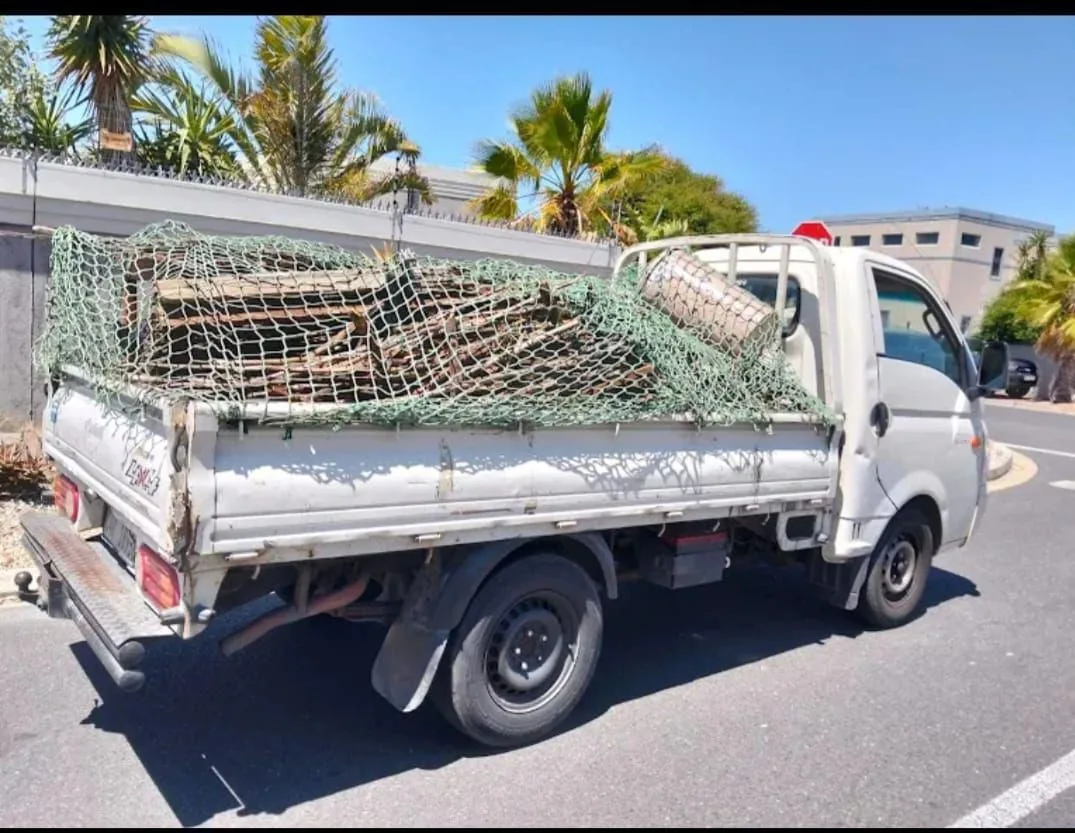
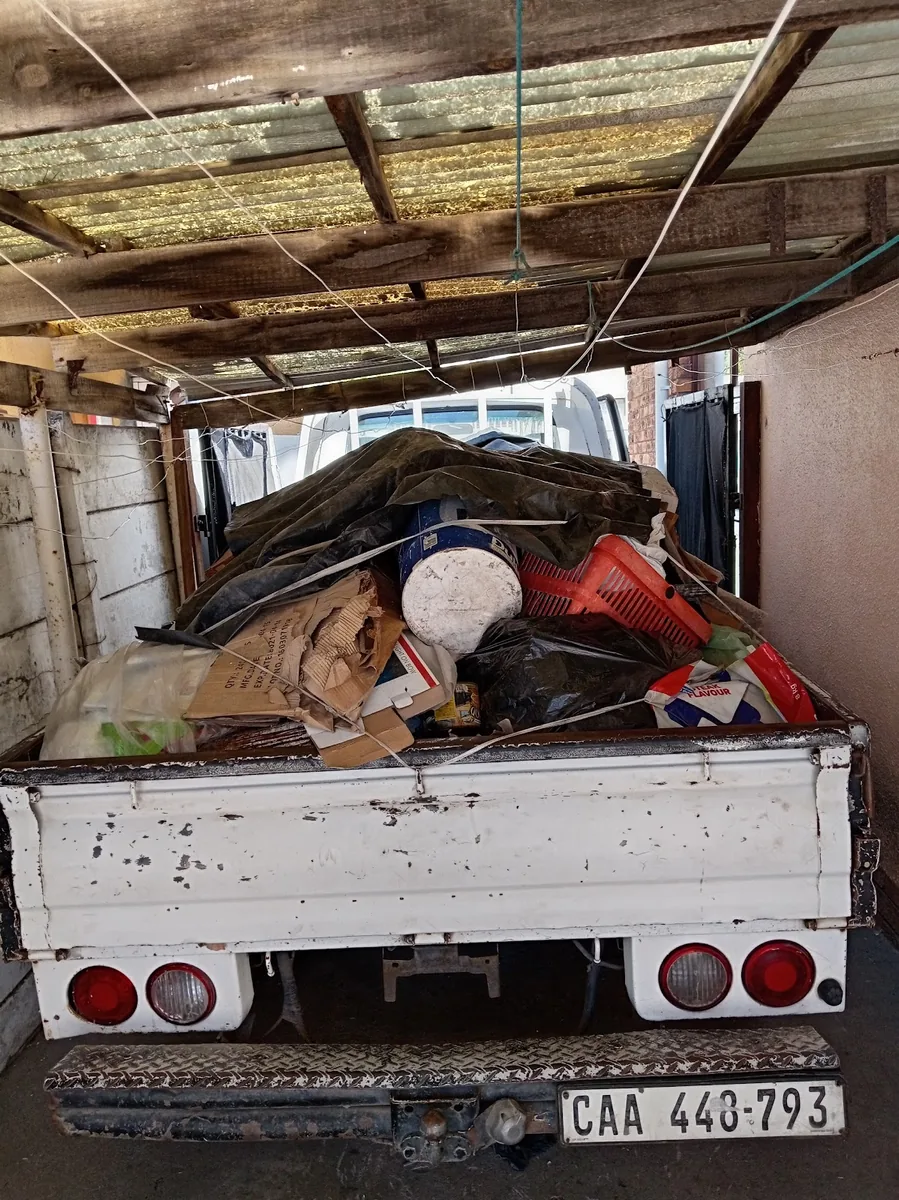
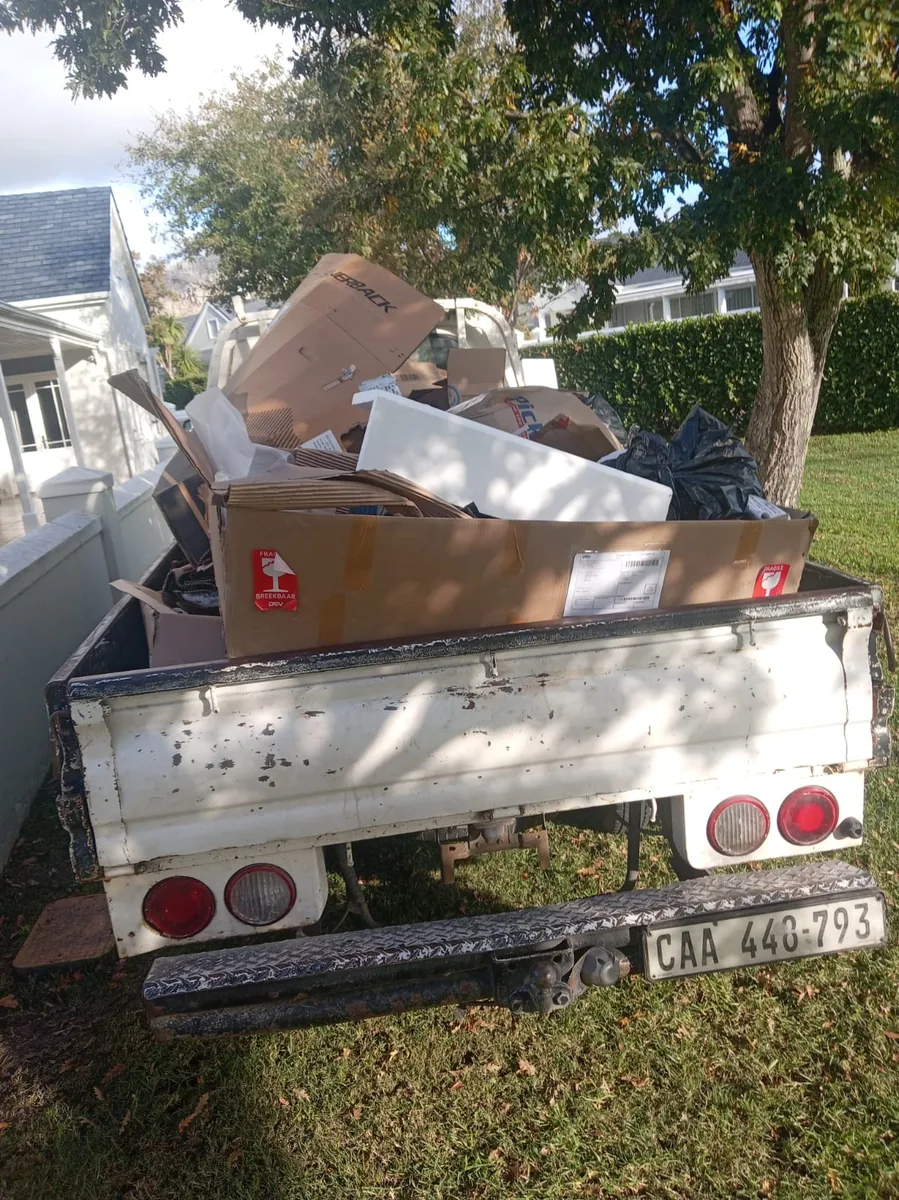
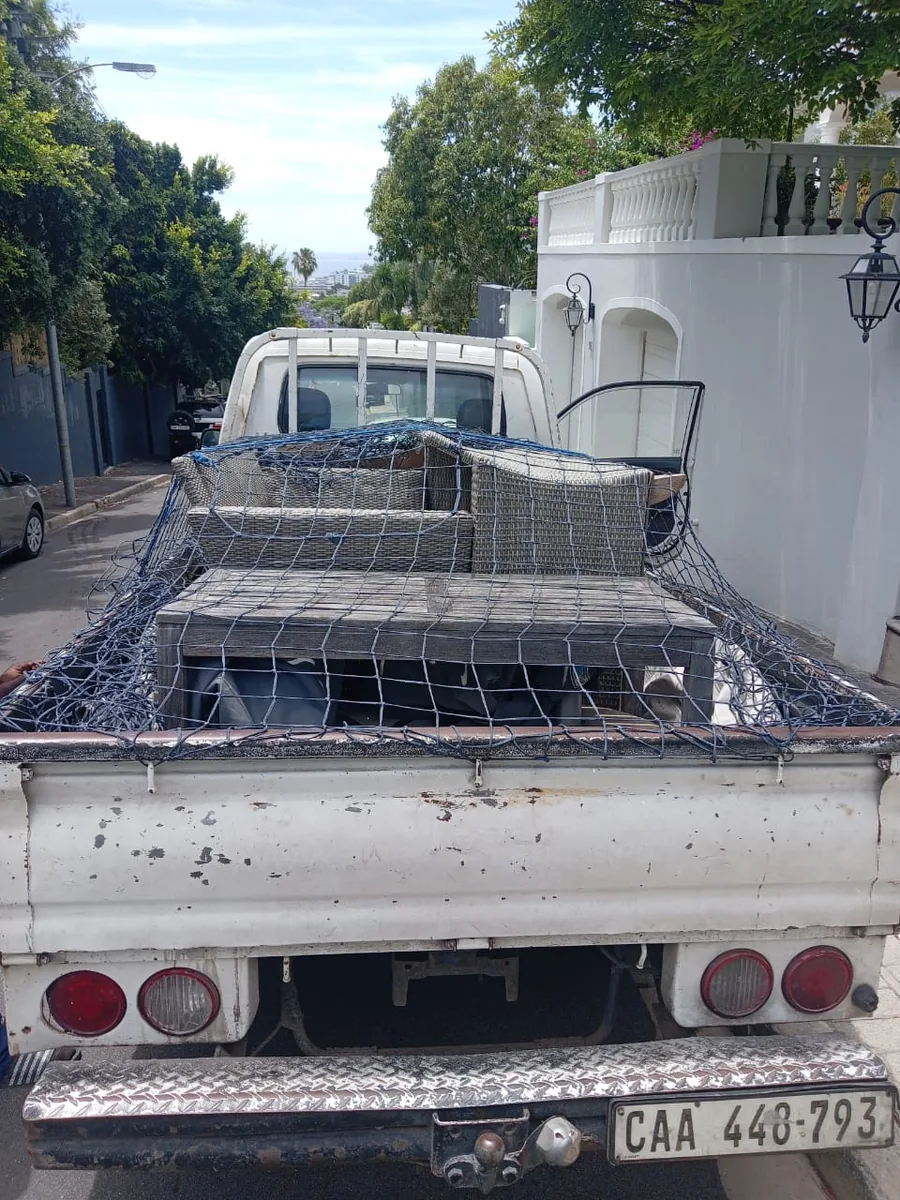
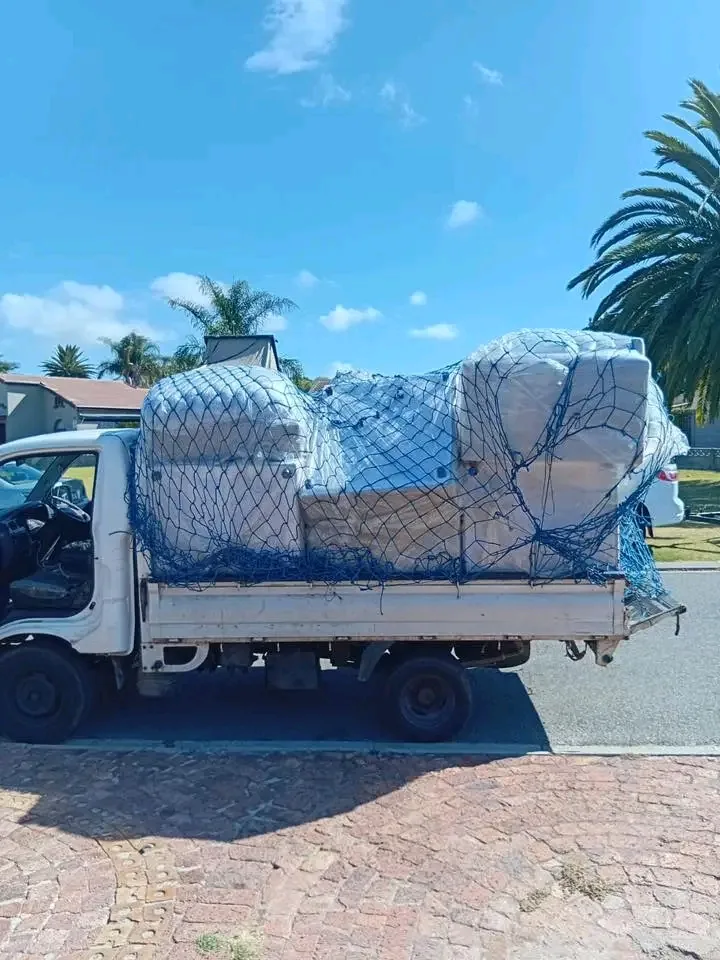
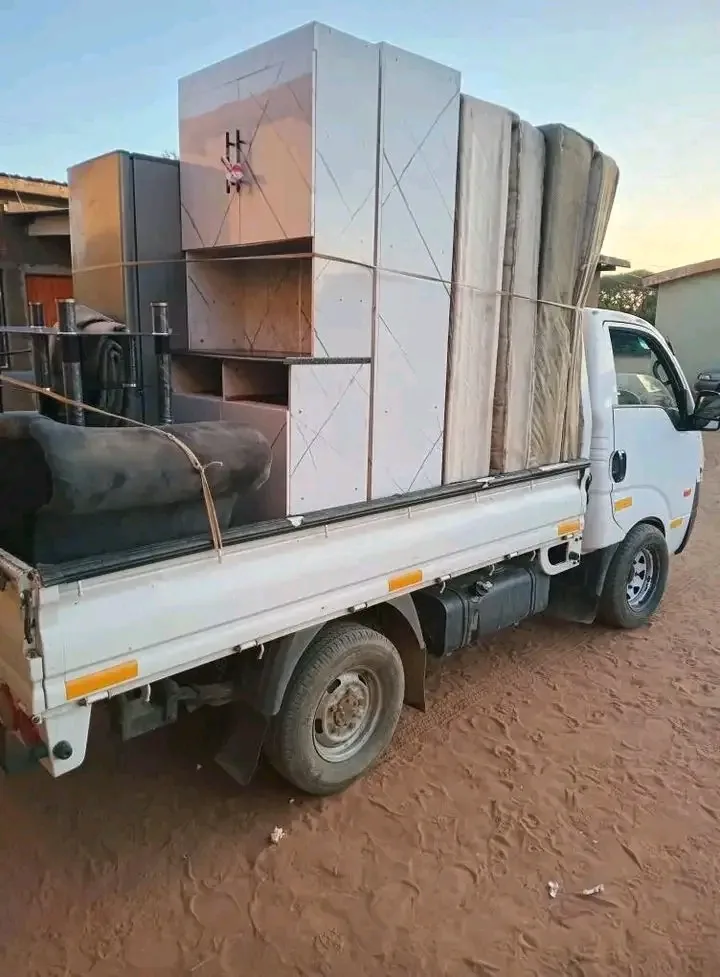
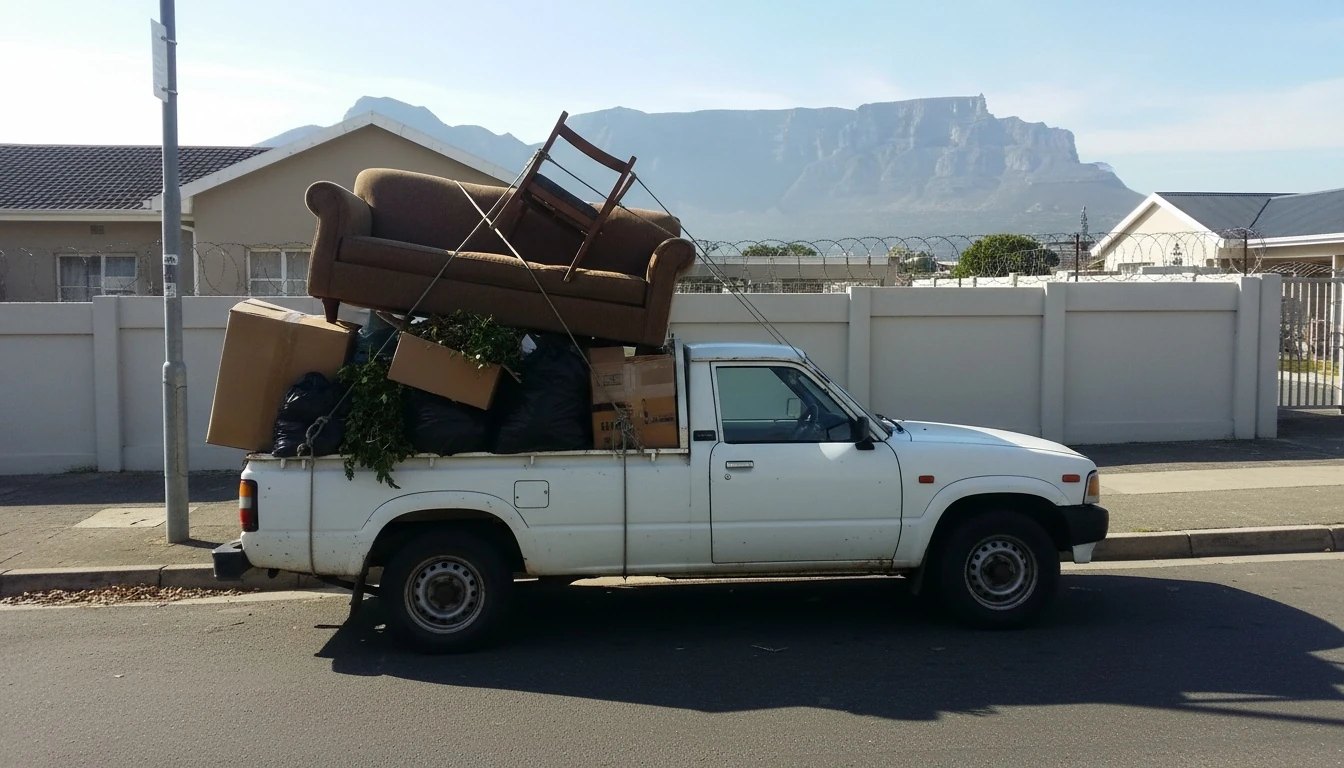
- Half-bakkie load (2–3m³): R1,200–R1,800. A single-room clear-out or a post-renovation tidy.
- Full bakkie load (4–5m³): R2,000–R2,800. A kitchen rip-out or a two-room clear-out, and the size most homeowners actually book.
- Midi-skip volume (6m³): R2,800–R3,800. A garage clear-out or a full house move-out.
- Maxi-skip volume (12m³): R5,000–R7,500. Whole-house clearance and estate-clearance territory.
Every figure above is a collection price: we bring a crew, load it and haul it away. The skip names in the last two rows are volume comparisons only, not skip hire, which is a separate service on its own price list.
Atlantic Seaboard addresses add roughly R200–R400 to those bands, and the outer belt (Constantia, Hout Bay, Noordhoek, the deep Helderberg) adds R150–R300 for the travel. Stairs, long carries of over about 15m from the pile to the kerb, same-day turnaround and any quantity of hazardous items that need splitting off the main load all move the number too. The full per-cubic-metre 2026 pricing breakdown covers the hidden line items to ask about before you accept any quote.
The law nobody reads: NEMWA s.16 and the homeowner's duty of care
The National Environmental Management: Waste Act 59 of 2008 (NEMWA) — the country's cornerstone waste statute — places a "general duty in respect of waste management" on every "holder of waste." Section 16(1) requires you to take all reasonable measures to avoid generating waste, to reduce, re-use and recycle it, and where you must dispose of it, to do so "in an environmentally sound manner" and "in such a manner that it does not endanger health or the environment or cause a nuisance." That word "holder" is defined broadly enough to capture every homeowner, the moment a bag of rubbish hits the kitchen floor. Your duty runs until the waste is in the lawful possession of someone permitted to take it — the City collection truck, an authorised drop-off, or a registered transporter.
Practically, two things follow. First, you cannot "dispose" of waste by hiring a man with a bakkie who tips it on an empty lot in Mitchells Plain at 11pm — that's still your liability if it's traced. Second, a clearance crew is supposed to take loads only to permitted drop-offs and provide a clear chain of custody if asked. We weigh-in tickets for any large job for exactly this reason.
The penalty side is sharper than most homeowners expect. The City's enforcement framework — under the Integrated Waste Management By-law — sets the standard illegal-dumping admission-of-guilt at R2,500, with the broader statutory range running R500 to R10,000, possible 6 months to 2 years imprisonment, vehicle impoundment, and release fees from R8,700 (first offence) to R17,400 (repeat). The City publishes the framework openly, along with a R1,000–R5,000 reward for tip-offs leading to a conviction.
eNCA on the City of Cape Town's 2024 Waste Strategy — the policy context behind the tightened enforcement.
The four household items you cannot put in your bin
The City's hazardous-waste guidance is unambiguous. The following streams are not permitted in the 240L residential wheelie bin and must be routed to specific drop-offs:
- Paint, solvents and household chemicals. Paint tins (full or part-full), thinners, oven cleaners, swimming-pool acid, ammonia and chlorine bleach in quantity. Take them to the Athlone Refuse Transfer Station or the Bellville Integrated Waste Management Facility — both accept up to 50kg/50L per resident per day at no charge.
- Batteries and fluorescent tubes. Car batteries, lithium and alkaline batteries, CFL bulbs and fluorescent tubes. Same hazardous-waste route. Many supermarkets and hardware shops also operate battery drop-points.
- Motor oil and used cooking oil. Sealed and labelled, to the same hazardous-waste drop-offs. Never down a drain — it's both a fine under City bylaws and a NEMWA s.16 breach.
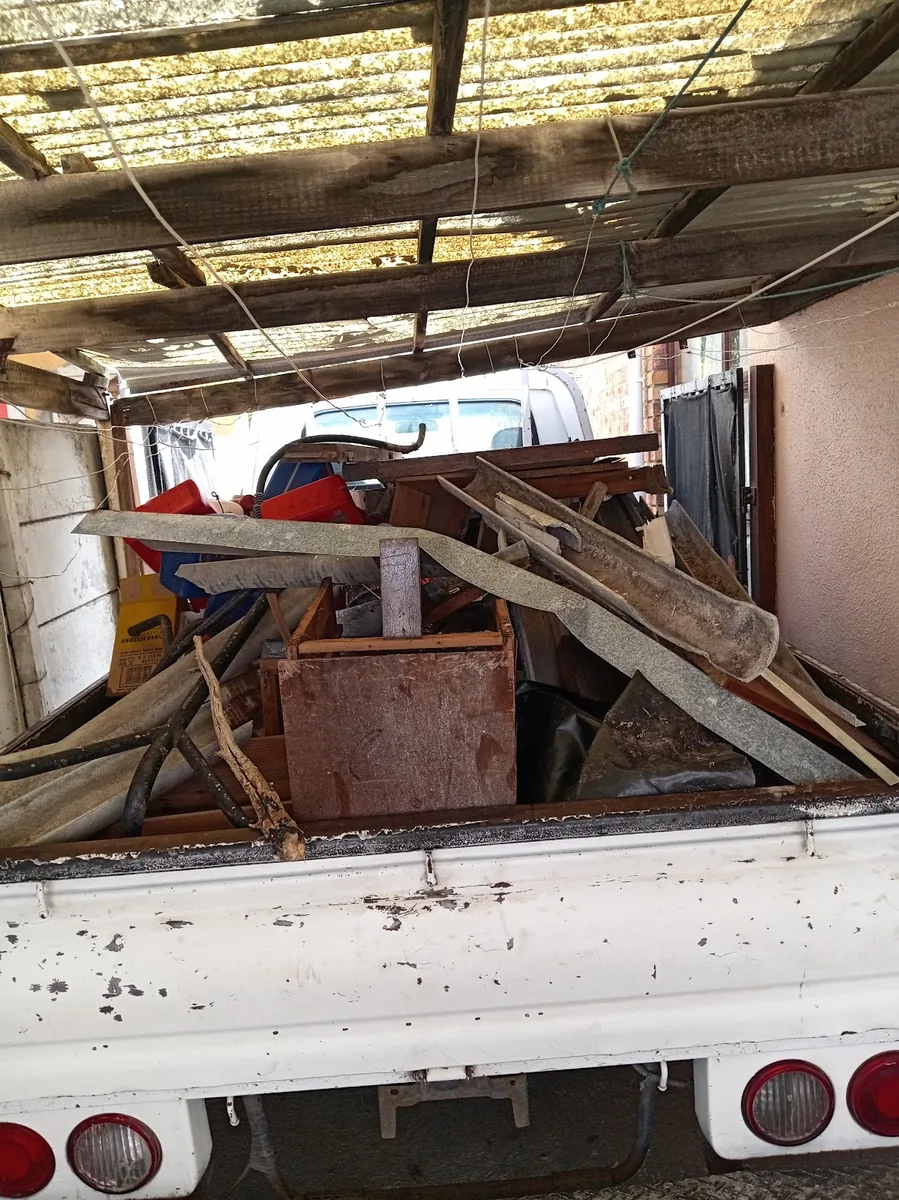
- Asbestos. If your house was built before about 1990 there's a real chance the ceiling boards, downpipes or roof sheets are asbestos-containing. It requires double-bagged transport by a registered asbestos handler. No clearance crew will touch it without that, and neither should you.
Old electrical and electronic equipment — fridges, kettles, computers, printers, cell phones, small appliances — is also out of the wheelie-bin stream. Under the Extended Producer Responsibility Regulations (2020) you can hand e-waste to a registered EPR scheme at no cost. As of 2024, EPR schemes had diverted around 68,000 tonnes from landfill nationally — most City drop-offs participate.
What an actual residential clearance looks like
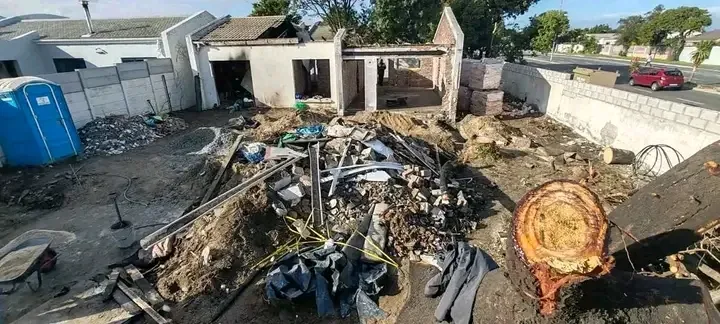
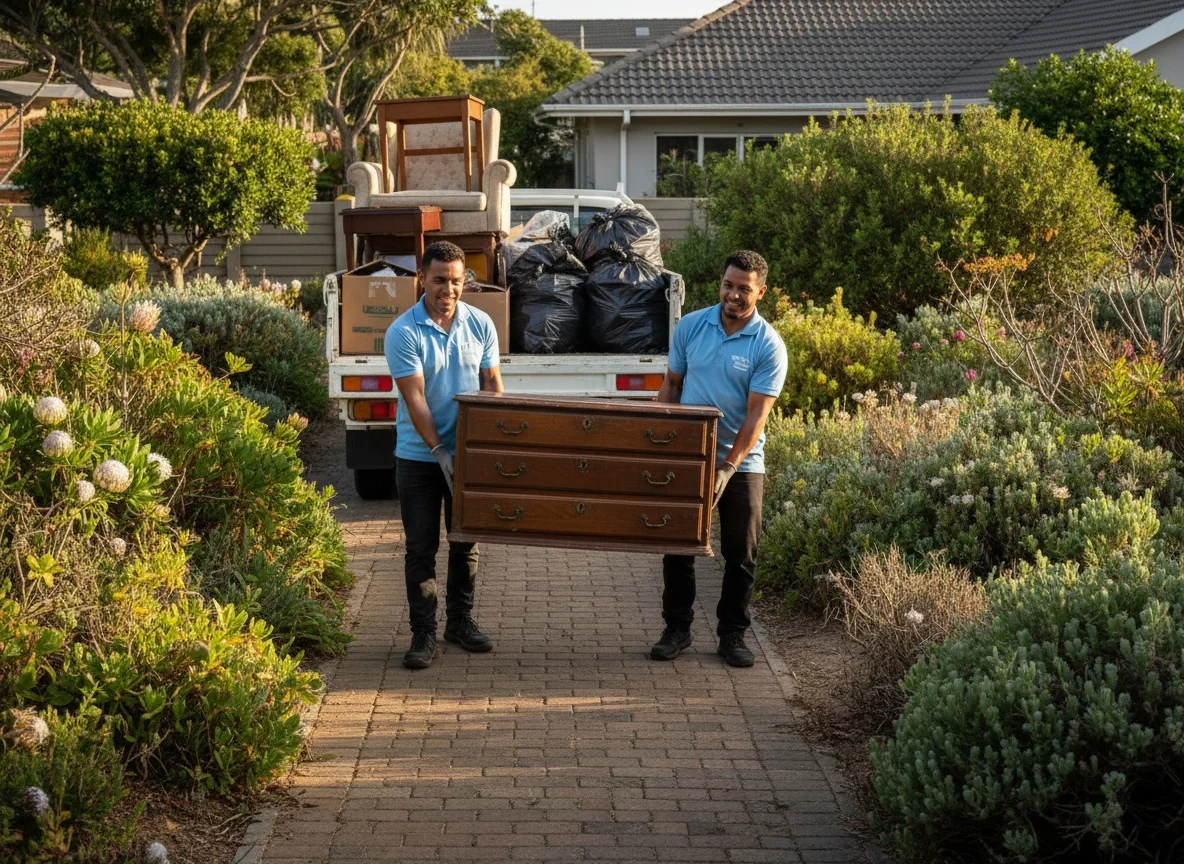
The difference between a competent residential rubbish removal job and "a guy with a bakkie" is mostly in the sorting. The drop-off your load ends up at depends entirely on what's in it, and the cost depends on the drop-off. A clean garden-only load tips free at any of the City's 20+ drop-offs. A clean builders-rubble load tips at a separate rubble bay. A mixed-domestic load with no hazardous items goes through the general residential stream. A mixed load with hazardous content goes to Athlone or Bellville, and the landfill portion goes elsewhere. Any single contaminated stream costs more.
On a typical residential clear-out we walk through the house with the homeowner first and split everything into four piles before loading: usable furniture and appliances for donation to a registered charity (a "reasonable measure" satisfying NEMWA s.16(1)(b)), general household rubbish for the main drop-off, hazardous items for Athlone or Bellville, and any clean rubble or garden refuse if a previous job left some on site. That's what a fixed-price residential quote should cover — the labour to do the sort, the transport, and the tipping fees at the right facilities.
Deceased-estate or move-out clearances need an extra step. Under the Administration of Estates Act, the executor has to inventory and account for the deceased's personal effects in the Liquidation and Distribution Account filed with the Master of the High Court. A clearance crew never starts removing items from an estate property without the executor's written sign-off — typically a one-page schedule of what's being removed and what's being donated, signed and dated.
When the wheelie bin can't cope: how to schedule a collection
The Cape Town residential clear-out market is fast-moving — most reputable crews quote the same day and collect within 24–48 hours for standard suburbs. Three rules make the process smoother:
- Send photos. Three is enough — a wide shot of the pile, a close-up showing the worst item (mattress / wardrobe / fridge) and a shot of the access route (driveway, gate, stairs). A photo-quote prices within R100. A phone description never does.
- Flag hazardous items separately. A 5L of old paint or a car battery isn't a deal-breaker; surprising the crew on arrival is. Confirmed up-front, it routes cleanly to Athlone or Bellville on the way back.
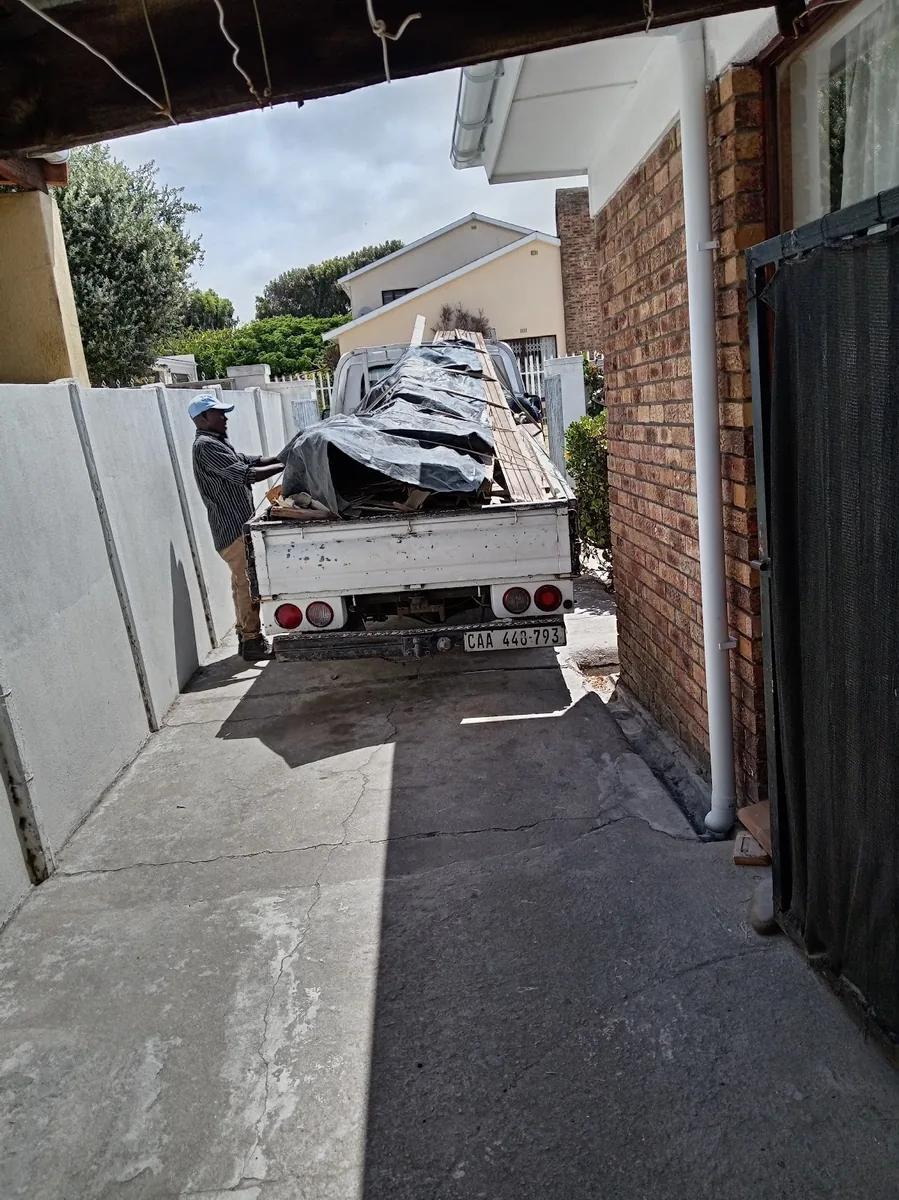
- Stage at the kerb where possible. Loading from a tidy kerbside pile is 15–20 minutes of crew time; loading from a back garden, up stairs, behind a gate the crew can't drive through, is two hours and the price reflects it.
For load-out support on a full house clearance, the routing is closer to the dedicated household junk removal service — bigger truck, three-person crew, half-day on site. For a single fridge or a small post- renovation tidy, a bakkie crew slots in next-day at the lower end of the price band. Either way, the quote form takes about a minute and the price you're given is the price you pay — if our crew finds more rubbish than the photos showed, we'll quote the extra in writing before we touch it.
The honest take: when to DIY and when to call
The City's free drop-off allowance is generous — 1.3 tonnes per resident per day. For a single bakkie-boot's worth of household clear-out and a free Saturday morning, the cheapest option is to sort it at home, label your hazardous items in a separate box, and drive it yourself. The City absorbs the cost; you absorb the time.
Beyond a single bakkie load — half a garage's worth of clear-out, a fridge that won't fit, a clearance after a long-term tenant moves out, an estate to wind up — the maths flips. A quoted collection is one phone call, one photo set and a half-day of your time back. Whatever the answer for your specific pile is, the rule is the same: do not leave residential rubbish on a verge or in an empty lot. Cape Town's enforcement on that has tightened sharply since 2024 — the City impounded more than 130 vehicles for illegal dumping in a single recent quarter — and the fine plus impoundment release runs comfortably past R10,000 before you've even paid for the rubbish to actually go somewhere lawful.
Keep reading
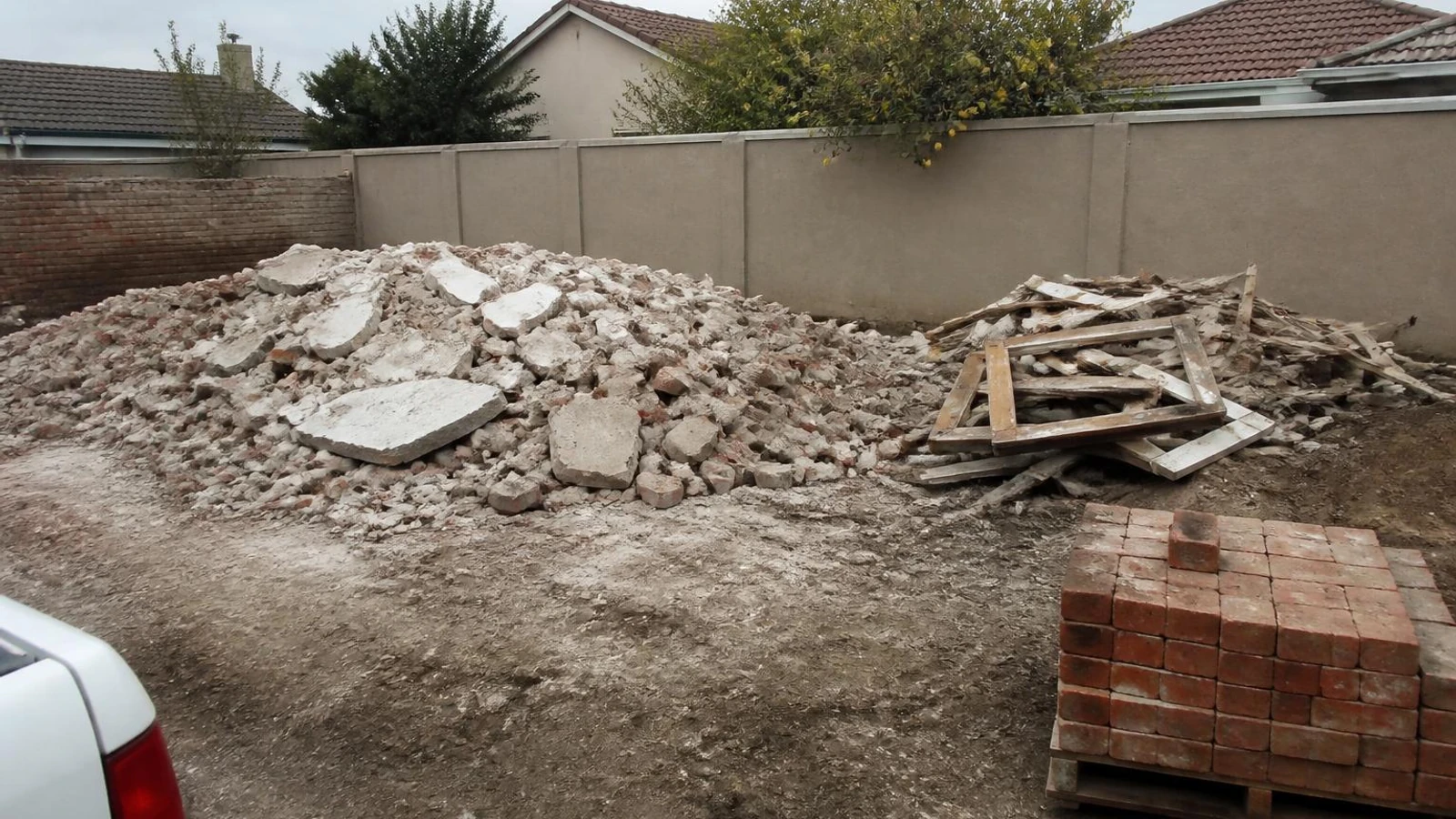
Demolition Debris Removal Cape Town
A knock-down leaves a heap far bigger than the wall it came from, and in Cape Town the paperwork follows the debris all the way to the weighbridge. Here is the order it runs in, and how to get the plot clear without a problem at final inspection.
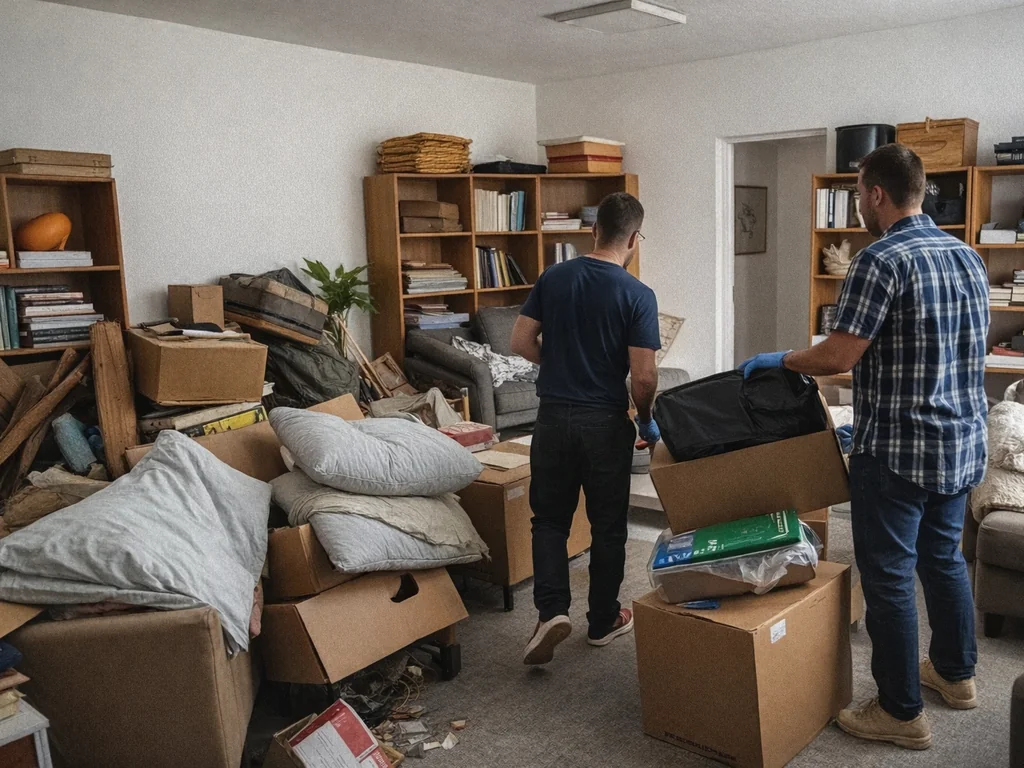
Bulky Waste Collection Cape Town
Cape Town has no bulky waste round. The City collects what fits in your wheelie bin, and everything larger is yours to move — so the real question is whether a skip or a one-off collection suits the size of the load you are actually looking at.
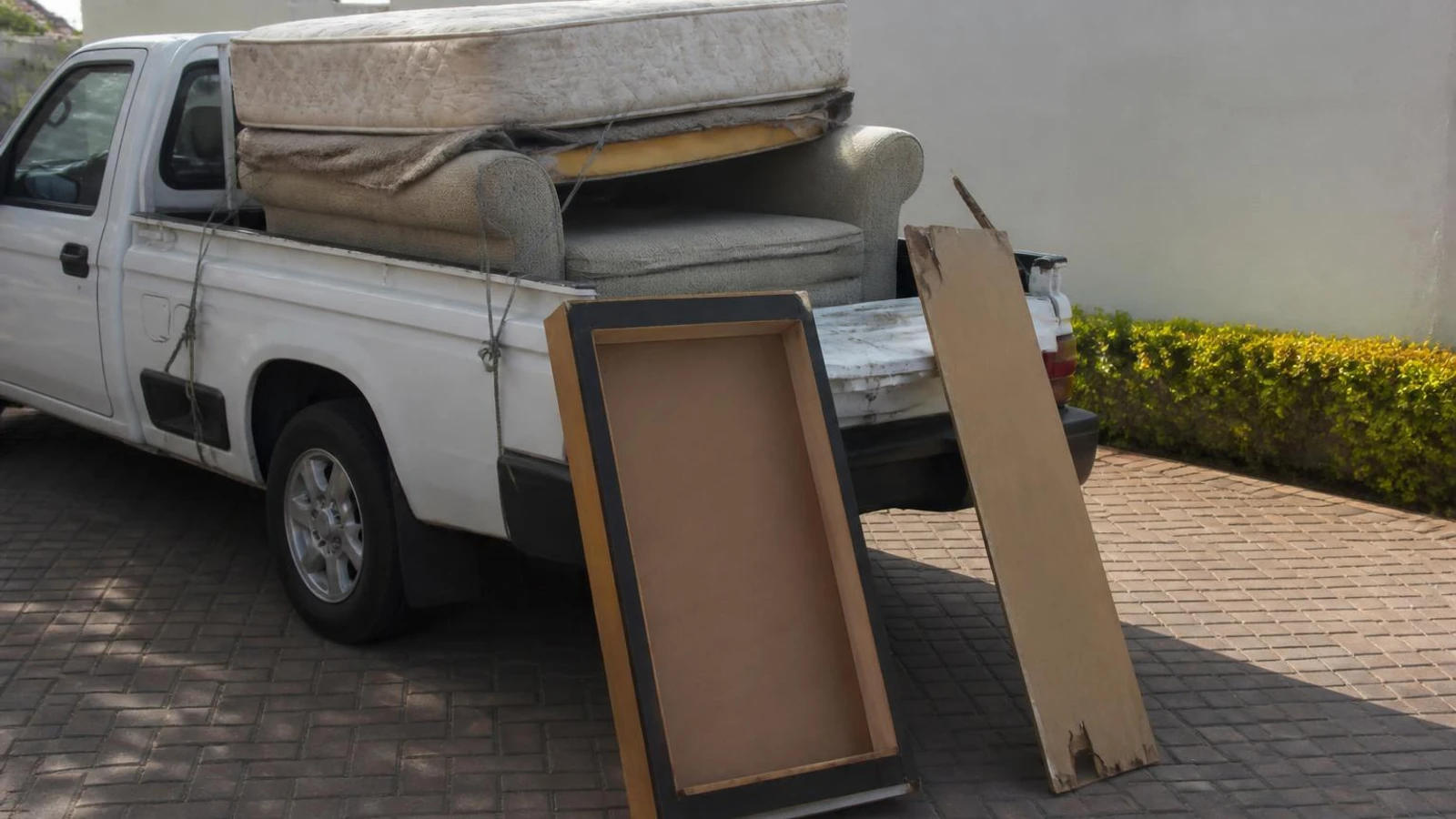
Mattress & Furniture Removal Cape Town
A mattress is the one thing in a house that nobody has a plan for. Here's how mattress and old furniture removal actually works in Cape Town — the municipal rules, who takes a donation, and when a paid collection is the sensible answer.